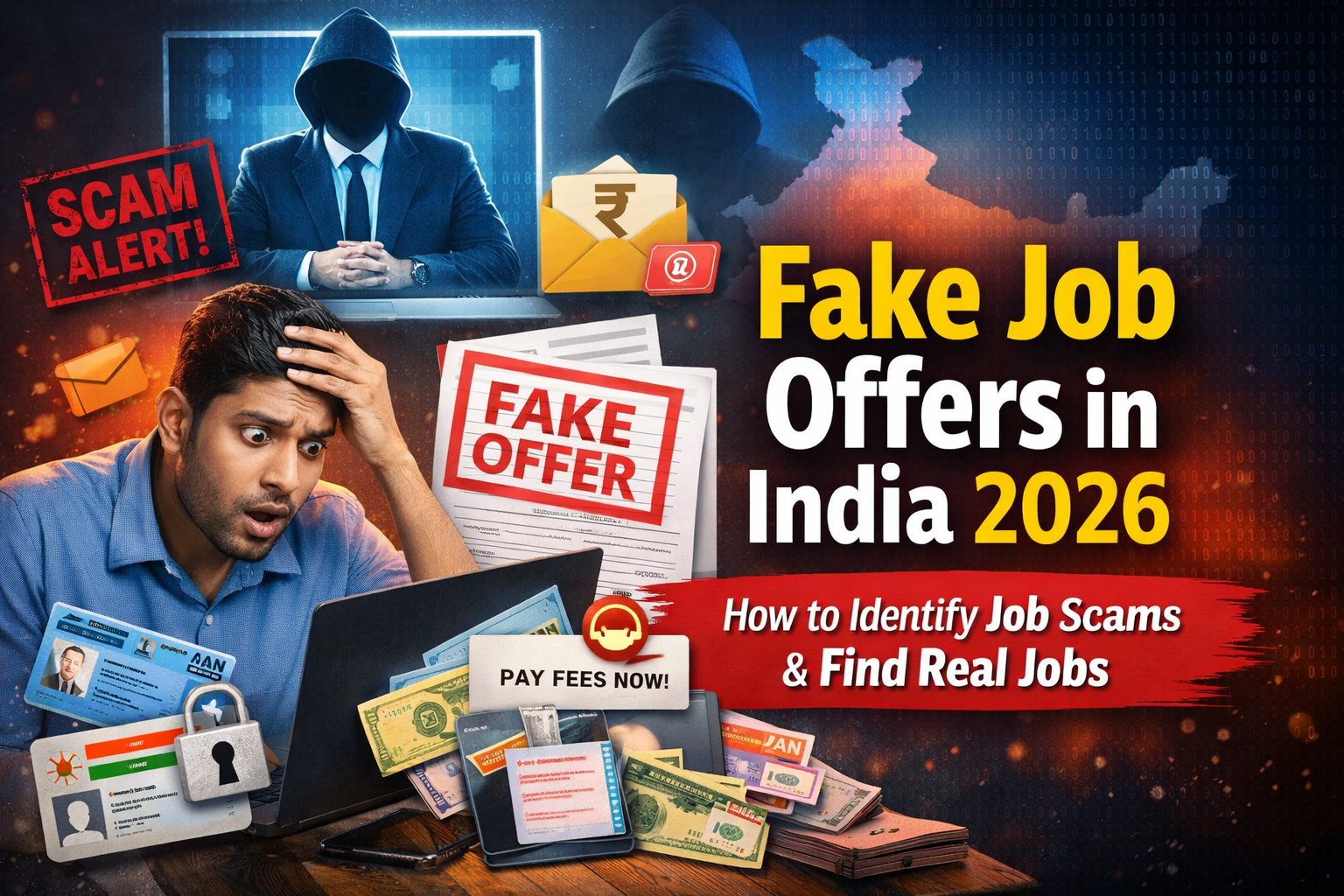
Fake Job Offers in India 2026
Fake job offers in India have increased sharply in 2026, making it more important than ever for job seekers to identify fake job scams and protect themselves from recruitment fraud.
The year is 2026. India’s job market is a thrilling, dynamic, and sometimes daunting landscape. With rapid technological integration, the rise of AI-powered recruitment, and an ever-growing pool of talented professionals, opportunities seem to be around every digital corner. You’ve polished your resume, optimized your LinkedIn profile with the latest keywords, and are actively scouring job portals. Then, it arrives—an email for a dream role with an impressive salary, flexible hours, and a fast-track interview process. Your heart leaps. But before you hit ‘reply’ with unbridled enthusiasm, a crucial question must be asked in today’s digital age: Is this offer real, or an elaborate scam designed to exploit your aspirations?
Fake job offers are not a new phenomenon, but they have evolved into sophisticated, high-stakes cons in 2026. Scammers leverage deepfake videos in interviews, create flawless but fraudulent company websites, and exploit the very platforms we trust. For a nation with a massive, ambitious, and digitally-connected workforce like India’s, the risk is significant. This comprehensive guide is your armour. We will dissect the anatomy of a modern fake job offer, explore the latest red flags, and equip you with the tools to navigate the 2026 job market with confidence and caution.
Why Fake Job Offers Are Increasing in India in 2026
To protect yourself, you must first understand the ecosystem that allows these scams to flourish.
- The Digital Gold Rush & Skill Gap Anxiety: India’s tech boom, startup surge, and gig economy expansion have created a narrative of limitless opportunity. This fuels urgency, making job seekers more likely to bypass due diligence for a “golden ticket.” Simultaneously, anxiety around skill relevance in an AI-driven market makes people vulnerable to offers that promise quick entry into hot fields like AI ethics, blockchain, or quantum computing.
- Sophistication of Tools: Scammers now use AI to craft flawless, grammatically perfect job descriptions. They can clone legitimate company career pages, generate fake offer letters with authentic-looking logos, and even use voice-cloning or basic deepfake tech for initial “screening calls.”
- Exploitation of Trusted Platforms: While major job portals have robust checks, scams migrate to professional networking sites, encrypted messaging apps (Telegram, WhatsApp), and even freelance platforms. A message from a “HR Head” on LinkedIn can feel more legitimate than an anonymous email.
- The Data Economy: The primary motive has shifted. While outright financial theft (via “registration fees” or “training charges”) remains, the bigger prize in 2026 is your personal data. A fake job application harvests your full name, address, photo, PAN number, Aadhaar details, educational certificates, and bank information. This data bundle is immensely valuable for identity theft, financial fraud, or sale on the dark web.
- The Rise of “Money Mule” and “Task-Based” Scams: A disturbing trend involves recruiting victims for criminal activity. You might be offered a “work-from-home” role as a “Payment Processing Executive” or “Wallet Verifier,” where you are asked to receive funds into your account and forward them, effectively laundering money. Another variant gives small, paid tasks initially to build trust before introducing a large, fraudulent “project fee.”
Anatomy of Fake Job Offers in India: 2026 Red Flags
Let’s break down the scam, step-by-step, highlighting the warning signs that should trigger immediate caution.
Phase 1: The Bait – The Irresistible Outreach
- Unsolicited Contact: You receive an email, WhatsApp message, or LinkedIn InMail from a recruiter for a role you never applied for. The message is personalised, mentioning your skills or profile, often sourced from data leaks or public profiles.
- Too-Good-To-Be-True Offers: Extremely high salaries for entry-level or vague positions (e.g., “₹8-10 LPA for a Data Entry Executive”). Emphasis on “100% Work from Home,” “No Experience Necessary,” and “Immediate Joining” are classic lures.
- Generic Email Domains: The email is from
@gmail.com,@yahoo.com, or a suspicious domain like@infotech-hiring.cominstead of the company’s official domain (e.g.,@tata.comor@accenture.com). 2026 Tip: Scammers now use domain names that are almost correct (e.g.,@infosys-careers.netinstead of@infosys.com). Look for subtle misspellings. - Poor Language & Design: While less common now, many scams still have grammatical errors, odd phrasing, or poorly formatted logos and documents.
Phase 2: The Hook – The Seamless “Interview”
- Instant Interview Scheduling: You are offered an interview within hours of first contact, often via text-based apps like WhatsApp or Telegram. The “interview” may consist of a few basic questions over chat.
- The AI/Hybrid Interview: A more advanced 2026 tactic involves a quick video call. The interviewer’s video might be pixelated, their answers slightly delayed (using a pre-recorded or deepfake video), or the call might be audio-only on a poor connection to mask inconsistencies.
- No Human Interaction with the Team: You never speak to a potential future manager or team member. The entire process is handled by one or two “HR personnel.”
Phase 3: The Catch – The Fraudulent Offer & Financial Demand
- The Overly Quick Offer: You receive a formal-looking “Offer Letter” via email within a day, often without a single proper interview. The letter may look convincing but lacks specific details like a clear job description, reporting manager’s name, or a legitimate office address.
- Request for Confidential Information: You are asked to provide scanned copies of your PAN card, Aadhaar, passport, bank details, and educational certificates before joining or even a background check consent from a verified third party.
- The Upfront Payment Demand: This is the most definitive red flag. You are asked to pay for:
- Registration/Processing Fees
- Training Materials/Software Licenses
- Background Verification Charges (Note: Legitimate companies either bear this cost or use renowned agencies that you pay directly after a formal offer, with receipts)
- Security Deposit or “Relocation Advance Processing Fee”
- Pressure Tactics: You are given a very short time (a few hours) to accept the offer and make the payment, creating a sense of urgency to prevent you from thinking clearly or verifying the offer.
Your 2026 Verification Protocol: A Step-by-Step Defence Strategy
Do not let excitement override logic. Follow this verification checklist meticulously.
Step 1: Investigate the Company
- Official Website: Don’t just click the link provided. Google the company’s name yourself. Scrutinize the official website. Is it professional? Does it have a “Careers” page? Are the job listings there consistent with the offer you received?
- Digital Footprint Check: Look beyond the website. Do they have a legitimate LinkedIn company page with employee listings? Are they featured in credible news articles? Use platforms like Zauba Corp (for Indian companies) to check their corporate registration (CIN number). In 2026, tools like Glassdoor 2.0 with verified employee reviews are crucial.
- Physical Verification: Does the company have a verifiable physical address? Use Google Street View. A prestigious address that turns out to be a vacant lot or a different small shop is a dead giveaway.
Step 2: Investigate the Recruiter/HR Person
- LinkedIn Deep Dive: Check the profile of the person who contacted you. Is it sparse, recently created, or does it have a odd connection list? Do they have legitimate endorsements? Are they listed as an employee on the official company LinkedIn page?
- Cross-Verification Call: Find the official contact number of the company’s headquarters (from their official site, not the offer letter). Call the main switchboard and ask to be connected to the HR department or the specific recruiter. This single step can debunk 90% of scams.
Step 3: Scrutinize the Communication & Offer
- Email Header Analysis: In your email client, check the full email header. Look at the “mailed-by” and “signed-by” fields. Do they match the company’s domain?
- Offer Letter Forensics: A real offer letter is legally binding. It will have specific terms: detailed job title, clear salary breakdown (CTC, gross, net), specific joining date and location, notice period details, and proper signatures. Vague language is a major red flag.
- Listen to Your Gut: If something feels off—the tone is too informal, the process is too easy, the salary is disproportionately high—pause. Share the offer with a trusted friend, mentor, or family member. A fresh pair of eyes can spot inconsistencies.
Advanced Threats in 2026 & How to Counter Them
- The Fake AI Interview Platform: Scammers create a mock interview portal that looks like a legitimate AI-interview tool. You complete the “interview,” and your data (video, answers, bio) is harvested. Defence: Only use interview links from verified company domains. Research the interview tool’s name if it’s unfamiliar.
- The “Clone Company” Website: They replicate a real company’s site exactly, with a slightly different URL. Defence: Always check the URL bar. Look for the padlock symbol (HTTPS) but remember, scammers can get SSL certificates too. The domain name is key.
- The “You’ve Been Hired” Phishing Text: A simple SMS: “Congratulations! You are selected for the Role of Analyst at [Big Firm]. Click here to complete onboarding.” The link installs malware or leads to a data-harvesting site. Defence: Never click on links in unsolicited job SMSes.
- Fraudulent Background Check Agencies: They partner with a fake “Background Verification Agency” that sends you a link to pay. Defence: Genuine agencies like Aspiring Minds, HireRight, or First Advantage have their own portals. You will be contacted by them directly after a formal written offer. Verify the agency’s authenticity independently.
What to Do If You Fall Victim to a Fake Job Scams in India
Act immediately. Time is critical.
- Financial Fraud: If you sent money, contact your bank immediately to try and stop the transaction. File a formal complaint at your local police station and with the Cyber Crime Cell (visit www.cybercrime.gov.in).
- Data Theft: If you shared personal documents, consider placing a fraud alert on your credit reports with CIBIL and other bureaus. Monitor your bank statements and Aadhaar authentication history closely. You can also file a report with the National Cyber Crime Reporting Portal.
- Report the Scam: Report the fake job post to the platform where you found it (Naukri, LinkedIn, etc.). This helps them take down the scammer and protect others.
Building a Secure Job Search Strategy for 2026
Prevention is the ultimate cure. Adopt these practices:
- Proactive, Not Reactive: Apply directly on the career pages of companies you are interested in. Use major job portals, but treat them as discovery platforms, not verification platforms.
- Fortify Your Digital Presence: Be mindful of what you share publicly on LinkedIn. Your address and personal phone number need not be visible to all.
- Upskill Through Legitimate Channels: Use verified platforms like Coursera, edX, or government initiatives (e.g., DIKSHA, SWAYAM) for skill development, not “certifications” offered by fake recruiters.
- Network Authentically: Build genuine connections in your industry. A referral from a trusted contact is the safest way to a new role and acts as a natural filter against scams.
Work From Home Job Scams in India (2026 Warning)
Many fake job offers in India target job seekers searching for work from home jobs. Scammers commonly advertise data entry jobs, form filling work, and online task-based roles with high daily earnings. These work from home job scams often ask for registration fees, training charges, or software installation payments. Genuine work from home jobs never demand upfront money. Always verify the company’s official website and avoid offers shared only through WhatsApp or Telegram.
Real Fake Job Complaints We See in India (2026)
Many job seekers contact us through comments and emails
At FreeJobspotral, we regularly receive messages from job seekers who lost ₹2,000–₹15,000 through WhatsApp packing job scams, fake HR calls using Gmail IDs, and Telegram “task jobs”. Many victims come from Telangana, Andhra Pradesh, and Karnataka. Most scams followed the same pattern…
Frequently Asked Questions (FAQs)
Q1. How can I identify a fake job offer in India?
Fake job offers usually ask for upfront fees, use unofficial email domains, offer unrealistically high salaries, and conduct interviews over WhatsApp or Telegram.
Q2. Do genuine companies ask for registration or training fees?
No. Legitimate companies in India never ask candidates to pay money for jobs, training, or interviews.
Q3. What should I do if I paid money for a fake job?
Immediately contact your bank and report the scam at cybercrime.gov.in. Also file a complaint with your local cyber-crime police station.
Q4. Are work from home job offers real or fake?
Work from home jobs are real, but many scams exist. Always verify the company website, official email, and never pay fees.
Q5. Which platform is best to report fake job scams in India?
Work from home jobs are real, but many scams exist. Always verify the company website, official email, and never pay fees.
Conclusion: Empowering Your Journey in the New Age Job Market
The Indian job market in 2026 is filled with genuine, transformative opportunities that can shape your career. The presence of sophisticated scams should not breed paranoia, but promote informed vigilance. Your greatest assets in this hunt are a critical mind and a disciplined approach.
Remember the cardinal rule: No legitimate company will ever ask you to pay money to get a job. Your skills, your experience, and your potential are your currency. Any offer that tries to reverse this transaction is, by definition, a fraud.
Arm yourself with the knowledge in this guide. Verify, cross-check, and trust your instincts. Let your ambition be the fuel for your search, but let caution be the steering wheel. Here’s to finding not just any job, but the right, real, and rewarding opportunity you deserve.
Stay Alert. Stay Informed. Stay Secure.
Check our latest verified government job updates
Read our guide on safe work from home jobs in India
About the Author
Bindu Kumar runs FreeJobspotral.in, a job awareness website focused on identifying fake job offers, work-from-home scams, and verified employment updates in India. The platform regularly publishes scam alerts to help job seekers avoid fraud.